Public Information Should Be Public

- 611 words
- 4 min
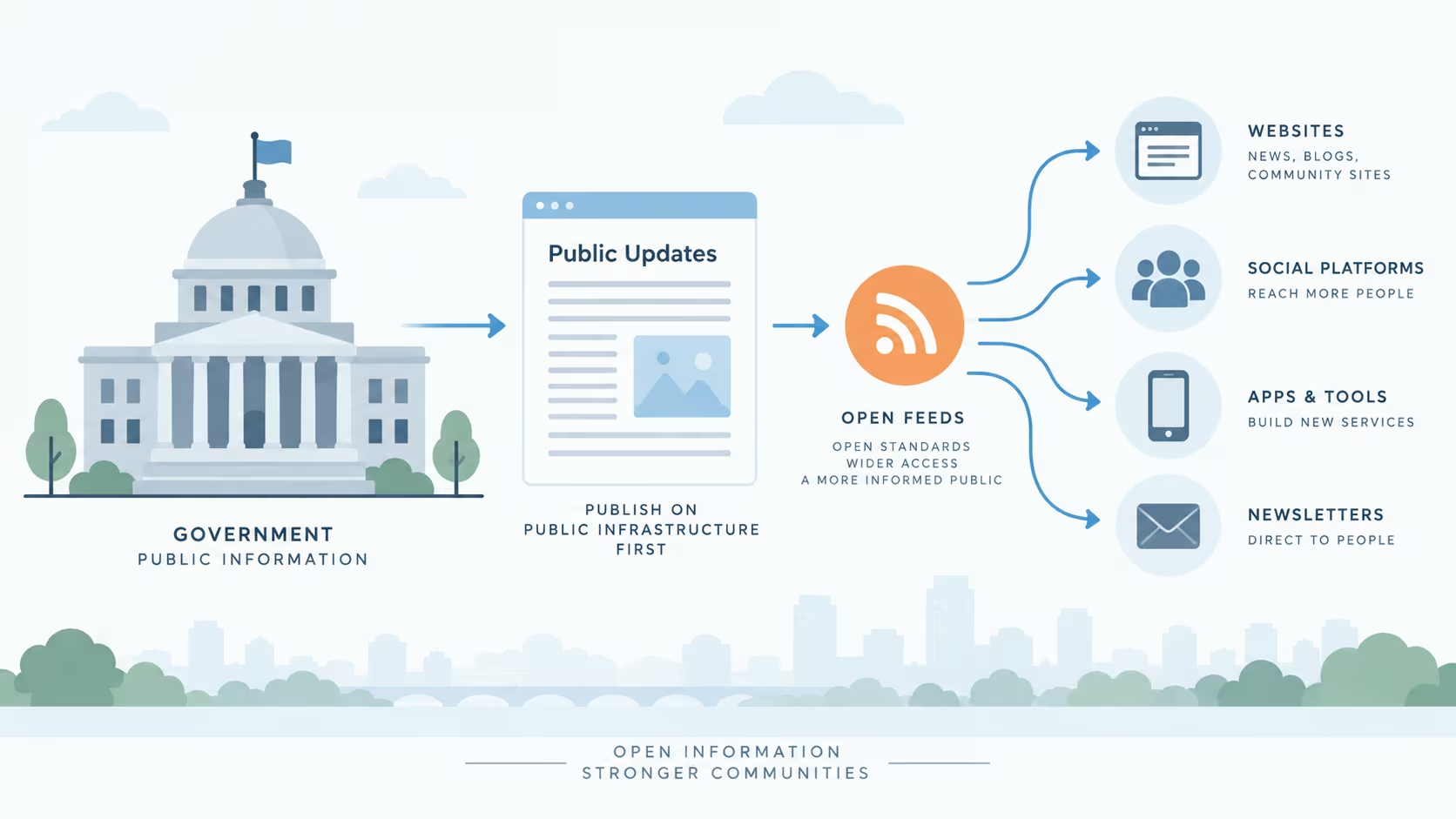
Government updates belong in an open feed By Mark Kennedy Founder · via Open RSS Blog
I saw this blog post from OpenRSS in my RSS reader, and it interested me in more than one way. I agree wholeheartedly with its sentiment.
Government offices, officials and agencies used to seem much more focused on making information publicly accessible. Here in Florida, we even have strong public records and open meetings laws, commonly known as the Sunshine Law1, though lately it sometimes feels like we are going through a cloudy season.
Now, however, it seems like a huge amount of government business, alerts and notifications take place primarily on Twitter. I still can't bring myself to call it X.
Public information should not require an account with a private company to access it. Government websites should be the primary source. The infrastructure is already there, already paid for by the public, and making information easily available should simply be part of doing the people's work.
Government could use POSSE (Publish (on your) Own Site, Syndicate Elsewhere). Publish the information on the official government website first, then send it to Twitter, Bluesky, Mastodon, Nostr, Facebook, Threads, Instagram or anywhere else people may be.
RSS should be one of the main ways to subscribe. It is open, simple and essentially free to provide once the website already exists. Services such as OpenRSS could also help where feeds do not already exist.
There is even a PESOS option (Publish Elsewhere, Syndicate (to your) Own Site). If an official posts somewhere else first, at the very least that information could be brought back to the government website and preserved there.
Other governments already make use of open feeds, including services in the UK and European Union. This is not some new or experimental technology.
Government should use social media and reach as wide a population as possible. But Twitter, Facebook, TikTok, Instagram or any other private company should never be the only way to receive public information.
Some federal, state and local governments already let people sign up for emergency text alerts, which is great. But Twitter is still often treated as the main place for both emergency and routine updates.
Government information should be published in as many ways as practical, whether it is an emergency alert or an ordinary update. That can include major technology and social media platforms, open technologies like RSS, and contracted services paid for with tax dollars. My local government, for example, uses text alerts through a notification service and used to use something called Everbridge.
Some of the mass-notification systems governments already pay for, including Everbridge and Genasys, even support RSS feeds. In some cases, the capability is already there and simply needs to be used.
The government should publish on infrastructure the public already pays for and distribute everywhere else. Let's keep people informed and use every practical resource available.
Just because an elected official's account on social media isn't private doesn't mean anyone can view its posts. You need an account on the platform just to see the updates. But many of us don't have an account and have no interest in creating one. Others have intentionally ditched a platform, haven't been on it for years, and don't want back on for legitimate reasons.
— Mark Kennedy, Founder, Government updates belong in an open feed, OpenRSS Blog
Florida's Sunshine Law: Statute 286.011 — Public meetings and records and Chapter 119 — Public Records.
Share
 Share on Bluesky
Listening
Loading recent listens…
Respond to this post
Reply by email, respond where this post was shared, or send a webmention. Tap the heart to leave a like or just say hello.


Webmentions
Reply from your own site with a webmention; they are always welcome.
No webmentions yet. Be the first!